CONCORDIA NEWS
We will protect your pet with 100% care and professionalism!
 Concordia Pet Care
 2026-10-15


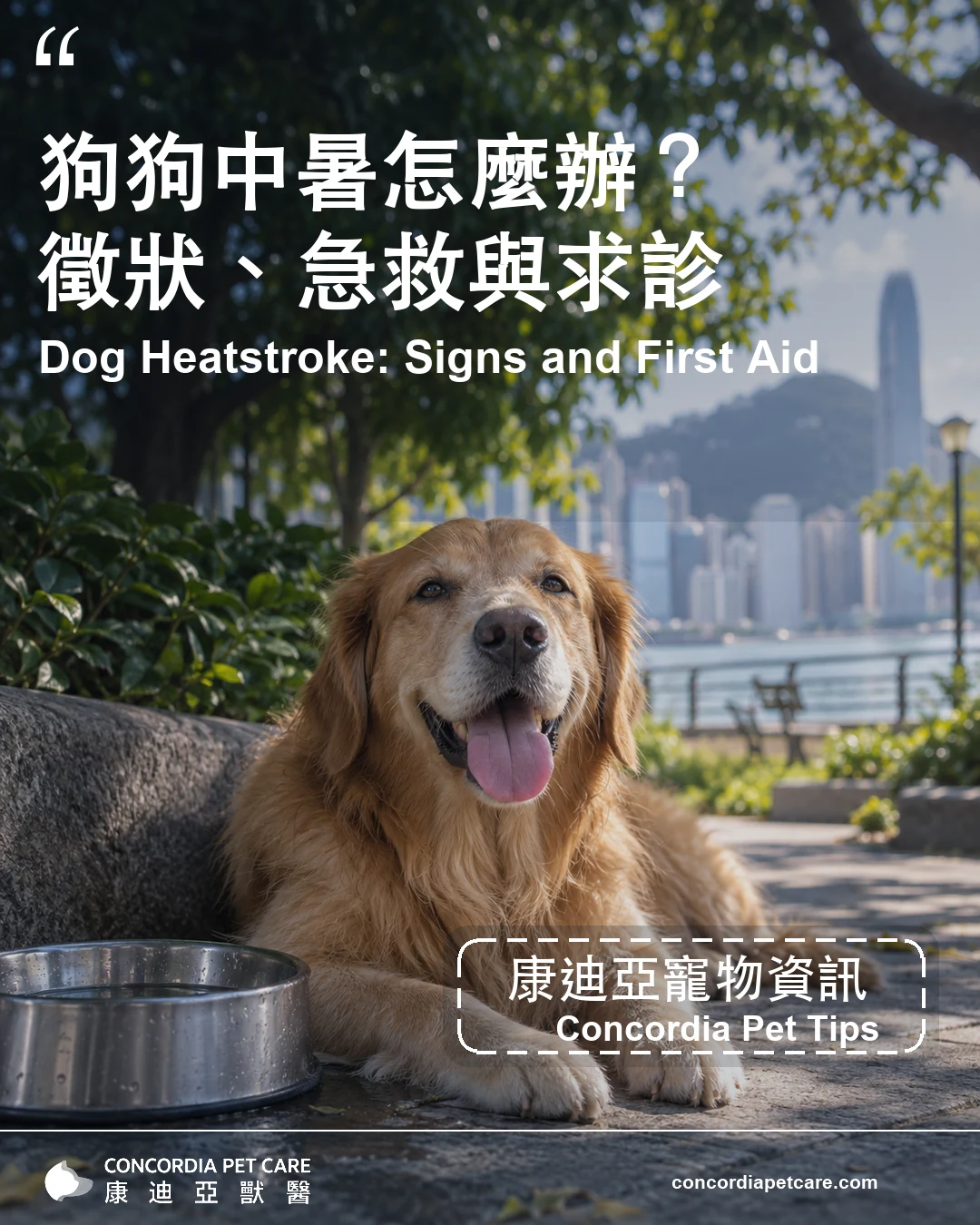
Heatstroke in dogs is a life-threatening medical emergency. It occurs when a dog's body produces or absorbs more heat than it can release, causing dangerous hyperthermia. Severe cases can injure the brain, kidneys, liver, gastrointestinal tract and blood clotting system. A dog may continue to deteriorate even after panting slows or the body begins to cool.
Hong Kong's heat and humidity can make it harder for dogs to lose heat through panting. Hot pavements and poorly ventilated spaces add to the risk. Heat-related illness can develop during a walk or exercise, or in a warm vehicle, room or balcony. No single outdoor temperature is safe for every dog; airway anatomy, body condition, age, fitness and health all matter.
If you suspect heatstroke, move your dog away from heat, call a veterinarian immediately, and begin active cooling. Do not delay action while waiting for a thermometer reading or for severe collapse to occur.
Early recognition lets you stop activity and start cooling before a dog becomes seriously ill. Possible signs include:
Clinical note: Panting alone does not prove heatstroke; dogs also pant after exercise or when stressed or in pain. Be more concerned if panting seems excessive for the activity, does not settle with rest, or comes with weakness, vomiting, diarrhoea or unsteadiness. Stop activity early and assess your dog in a cool place.
Severe heatstroke requires immediate emergency intervention. Look out for:
A veterinarian assesses possible heatstroke using the history and clinical signs, not one temperature reading alone. Cooling before arrival may lower the measured temperature while internal complications remain possible.
When you arrive at the hospital, inform the emergency team:
If your dog shows signs of heat stress or heatstroke, follow these immediate steps:
Move your dog directly into an air-conditioned room, shaded area, or well-ventilated space. Remove heavy equipment, harnesses, muzzles, or clothing if safe to do so. Ensure the airway remains unobstructed. If your dog has collapsed, position the neck comfortably straight and do not force them to stand or walk.
Call a veterinarian while you start cooling, or ask someone else to call. Describe your dog's signs and follow the clinic's advice about urgent transport. Do not wait for collapse before seeking help.
Emergency contact: Concordia Pet Care's 24-hour veterinary emergency service in Happy Valley can be reached at 2679 1000.
Wet the dog's body thoroughly with cool running tap water, especially the trunk and abdomen, so the water reaches the skin. Use a fan or air conditioning to improve airflow. Keep water away from the face and airway. Start cooling at the scene before transport.
Avoid wrapping the dog in wet towels: A towel covering the body can limit evaporation. Wet the dog directly with running water and use airflow instead.
Do not rely on ice packs or cooling only the paws: Cooling the trunk and abdomen with water is more useful. Do not delay while looking for a particular water temperature.
Do not immerse an unconscious or very weak dog in water: They may inhale water or drown. Keep the airway clear and seek emergency help.
If your dog is alert and can swallow normally, offer small amounts of water. Never force water into the mouth of a weak or confused dog because it may be inhaled into the lungs.
Use an air-conditioned vehicle when available. If possible, have one person monitor the dog's breathing and alertness while another drives. Follow the emergency team's advice about any further cooling during transport.
Medication warning: Do not give paracetamol, ibuprofen, aspirin or other human fever or pain medicine for suspected heatstroke unless a veterinarian specifically instructs you to do so. These medicines do not replace active cooling and can harm dogs if used inappropriately.
Veterinary teams use rectal temperature and the dog's overall condition to guide cooling. Current guidance suggests stopping active cooling at about 39.7–40°C if a rectal temperature can be measured safely; noisy upper-airway breathing may require different advice. Do not delay the first cooling steps while looking for a thermometer.
Begin active cooling immediately and call the emergency hospital. If a safe temperature reading is unavailable, current veterinary guidance supports cooling at the scene for around 15 minutes, then patting the dog dry and transporting promptly. Follow the emergency team's advice for your dog; do not delay transport while searching for equipment.
Even if a dog seems better after initial cooling, complications can appear over the following hours or days. Depending on severity, these may include:
The veterinarian may assess circulation, hydration, neurological status and organ function. Blood or urine tests and treatment such as fluids, oxygen or other supportive care depend on the findings. Prompt assessment helps the team identify complications and plan monitoring.
Any dog can develop heat-related illness. Risk may be higher in dogs with the following features or health conditions:
Flat-faced dogs: French Bulldogs, English Bulldogs, Pugs, Shih Tzus and similar breeds may have less efficient airways and can struggle to cool themselves by panting, especially in hot or humid conditions.
Combined risks: A flat-faced dog that is also overweight or has an airway problem may need extra caution. Ask your veterinarian about safe activity for your individual dog.
Older dogs and puppies: Age and individual health can affect resilience in hot weather.
Overweight dogs: Excess body condition is associated with increased heat-related illness risk.
Dogs with dense coats: Coat type can affect comfort and heat management, but individual risk varies. Do not rely on breed labels alone.
Dogs with existing health conditions: Heart or airway disease, mobility problems and other illnesses may increase risk.
During exercise: Even an active dog may keep chasing a ball or walking despite overheating. Plan breaks and stop if early warning signs appear.
Choose cooler times: Walk in the early morning or later evening when conditions are cooler. Shorten or postpone activity when it is hot or humid, and watch your dog rather than using one humidity threshold.
Check the ground: Pavement can be hot enough to hurt paws and add to heat exposure. Choose shaded routes and avoid surfaces that feel uncomfortably hot to your hand.
Bring water and seek shade: Carry drinking water and a bowl, and offer frequent breaks in a cool, ventilated place.
Never leave a dog in a parked car or hot enclosed space: A parked vehicle can heat rapidly even with a window partly open. Sunny balconies and poorly ventilated rooms can also become dangerous.
Yes. Poor ventilation, lack of air conditioning, direct sunlight through windows, or confinement in warm, humid rooms can cause indoor heatstroke.
Ice-cold water is not required. Use readily available cool tap water and airflow, and do not postpone cooling while looking for ice. An unconscious or very weak dog should not be immersed because of the risk of inhaling water.
No. Nose moisture is not a reliable health indicator. Focus on panting behaviour, gum colour, alertness, unsteadiness, and gastrointestinal symptoms.
Severe heatstroke can injure the gastrointestinal lining and may cause vomiting, bloody diarrhoea or dark stools. These signs need urgent veterinary assessment.
Yes. Problems affecting organs or blood clotting can emerge after a dog first appears to improve. Arrange veterinary assessment whenever heatstroke is suspected.
 @concordiapetcare










 HOME PAGE